Introduction
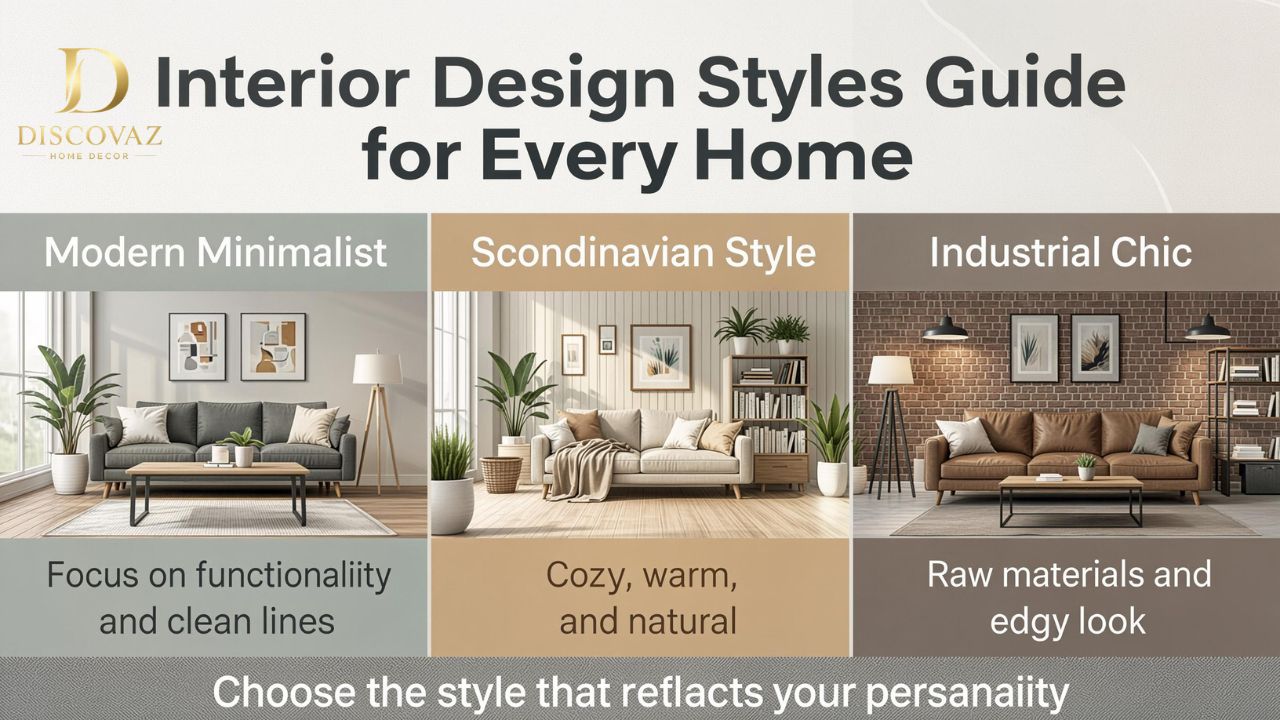
Step into any beautifully designed home and you can feel the personality before you even notice the furniture. The magic behind that feeling often lies in thoughtfully chosen interior design styles that shape how a space looks, functions, and connects with its occupants.
Whether you’re renovating your first apartment or refreshing a long-loved home, understanding different interior design styles can completely transform your approach. Instead of randomly mixing furniture or chasing trends, you’ll be able to create spaces that feel cohesive, intentional, and deeply personal.
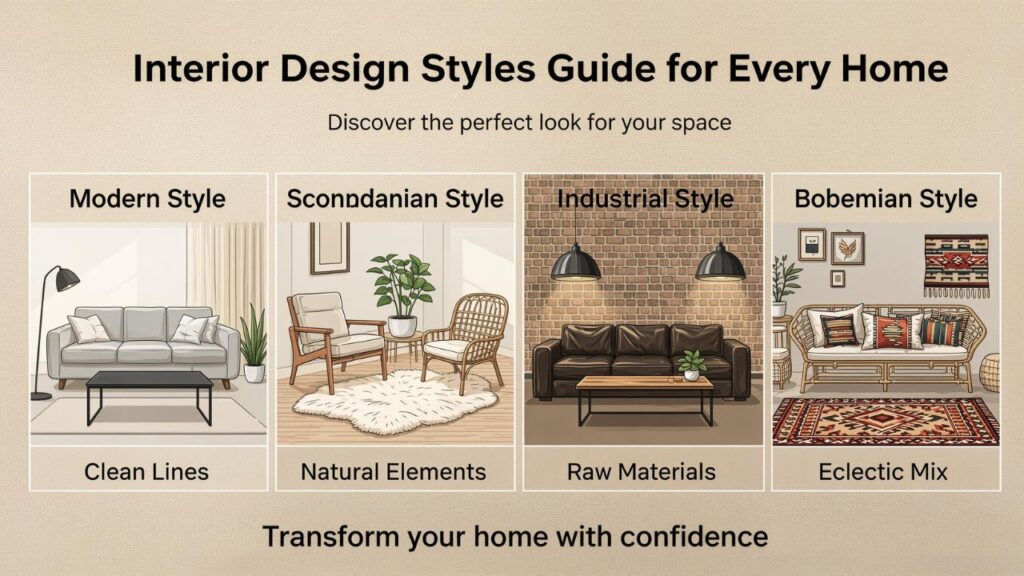
In a world overflowing with inspiration from Pinterest boards, Instagram feeds, and home makeover shows, it’s easy to feel overwhelmed. This guide will help you navigate the most popular and enduring design aesthetics, understand what makes each unique, and discover which one truly fits your lifestyle.
What Are Interior Design Styles?
At their core, interior design styles are distinct approaches to arranging space, color, texture, furniture, and décor. Each style has:
- A recognizable visual identity
- Characteristic materials and finishes
- A typical color palette
- A design philosophy behind it
Some styles emphasize minimalism and function. Others celebrate ornamentation and layered textures. Some draw from history, while others embrace modern innovation. Knowing the foundations of each style allows you to blend elements with confidence rather than guesswork.
Modern Interior Design Styles
Modern design emerged in the early 20th century and continues to influence homes today.
Key Characteristics
- Clean, straight lines
- Neutral color palettes (black, white, gray, beige)
- Open floor plans
- Functional furniture
- Minimal decorative accessories
Modern interiors focus on simplicity without sacrificing comfort. Think sleek sofas, low-profile furniture, and a strong emphasis on form following function.
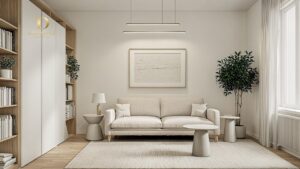
After two paragraphs, here’s a visual inspiration:
Best For
- Urban apartments
- Professionals who prefer uncluttered spaces
- Homes with abundant natural light
Modern interiors work especially well in smaller homes because the lack of clutter creates a sense of openness and flow.
Contemporary Interior Design Styles
Often confused with modern design, contemporary style reflects what is current and evolving right now.
How It Differs from Modern
- Incorporates trends
- Mixes materials (metal, glass, wood)
- Uses bold accent colors
- Features sculptural lighting
While modern design refers to a specific historical movement, contemporary interiors shift with time. Today’s contemporary spaces may include curved furniture, textured walls, and statement lighting fixtures.
Key Elements
- Neutral base with pops of color
- Minimal yet comfortable furniture
- Artistic décor pieces
- Large windows
Contemporary spaces feel polished but not rigid, making them ideal for homeowners who enjoy refreshing their décor every few years.
Minimalist Interior Design Styles
Minimalism is less about having less and more about choosing intentionally.
Definition
Minimalist design prioritizes simplicity, functionality, and breathing space. Every object serves a purpose.
Core Features
- Monochromatic color schemes
- Decluttered surfaces
- Hidden storage
- Natural light emphasis
After two paragraphs, here’s a calming visual:
Who Should Choose Minimalism?
- People who value calm environments
- Small-space dwellers
- Anyone overwhelmed by visual noise
Minimalist interiors reduce stress by eliminating unnecessary visual distractions.
Scandinavian Interior Design Styles
Rooted in Nordic countries, Scandinavian design balances beauty and practicality.
Hallmarks of Scandinavian Style
- Light wood finishes
- Soft neutral tones
- Cozy textiles (throws, rugs)
- Functional furniture
This style thrives in regions with long winters, so maximizing light is essential.
The Concept of “Hygge”
Hygge (pronounced “hoo-gah”) emphasizes comfort and well-being. Think:
- Candlelight
- Warm blankets
- Inviting seating arrangements
Scandinavian homes feel effortlessly welcoming, combining simplicity with warmth.
Industrial Interior Design Styles
Inspired by old warehouses and factories, industrial style celebrates raw materials.
Defining Features
- Exposed brick walls
- Metal beams
- Concrete floors
- Open layouts
Instead of hiding structural elements, industrial design highlights them.
How to Soften Industrial Spaces
- Add leather sofas
- Use warm lighting
- Incorporate natural wood
Industrial interiors work beautifully in lofts and urban spaces but can be adapted to suburban homes with the right balance.
Bohemian Interior Design Styles
Bohemian (or “boho”) style celebrates creativity and self-expression.
Key Characteristics
- Layered textiles
- Vibrant colors
- Global-inspired décor
- Eclectic furniture
Unlike minimalist interiors, bohemian spaces thrive on abundance and personality.
Tips for a Balanced Boho Look
- Start with a neutral base
- Layer patterned rugs
- Add plants generously
- Mix vintage and modern pieces
Boho interiors are ideal for artists, travelers, and free spirits who want their home to reflect their journey.
Farmhouse Interior Design Styles
Farmhouse design evokes comfort, tradition, and rustic charm.
Core Elements
- Shiplap walls
- Distressed wood
- Neutral tones
- Vintage accessories
There are two main variations:
- Traditional farmhouse – warmer and rustic
- Modern farmhouse – cleaner lines, black accents
Farmhouse spaces feel lived-in and welcoming, making them perfect for family homes.
Traditional Interior Design Styles
Traditional design draws inspiration from 18th and 19th-century European décor.
Features
- Rich wood furniture
- Symmetrical layouts
- Classic patterns
- Ornate detailing
Color palettes often include deep reds, greens, and browns.
Why It Endures
Traditional interiors feel timeless. They’re ideal for those who appreciate history, elegance, and refined craftsmanship.
Luxury and Glam Interior Design Styles
Luxury design focuses on refinement, sophistication, and indulgence.
Signature Elements
- Velvet upholstery
- Marble surfaces
- Gold or brass accents
- Statement chandeliers
Color schemes may include jewel tones like emerald, navy, and burgundy.
How to Achieve Luxury on a Budget
- Use mirrors strategically
- Choose one standout piece
- Invest in quality textiles
Luxury isn’t about clutter; it’s about carefully curated elegance.
How to Choose the Right Style for Your Home
With so many interior design styles available, how do you decide?
Ask Yourself:
- How do I want this space to feel?
- What is my daily routine?
- Do I prefer clean or layered looks?
- How much maintenance am I comfortable with?
Practical Steps
- Save images that resonate with you.
- Identify recurring themes.
- Note colors and textures you gravitate toward.
- Start small—update one room first.
Remember, your home should reflect you, not just a trend.
Mixing Interior Design Styles Successfully
You don’t have to commit to just one aesthetic.
The 70-30 Rule
- 70% dominant style
- 30% contrasting elements
For example, modern furniture with bohemian textiles or farmhouse décor with contemporary lighting.
Keep It Cohesive
- Maintain a consistent color palette
- Repeat materials across rooms
- Balance textures
Thoughtful blending prevents spaces from feeling chaotic.
Common Mistakes to Avoid
- Overcrowding rooms
- Ignoring scale and proportion
- Choosing style over comfort
- Forgetting lighting
Lighting, in particular, can make or break a room. Layer ambient, task, and accent lighting for depth and functionality.
FAQ
Frequently Asked Questions
What are the most popular interior design styles today?
Modern, contemporary, Scandinavian, and farmhouse styles remain highly popular due to their adaptability and timeless appeal.
Can I mix two different interior design styles?
Yes. Many homes successfully blend styles. Focus on cohesion through color and materials.
How do I know which style fits my personality?
Pay attention to the environments where you feel most comfortable. Your natural preferences are strong indicators.
Are interior design styles expensive to implement?
Not necessarily. Budget-friendly versions of every style exist. Smart sourcing and DIY projects help reduce costs.
Which style works best for small apartments?
Minimalist and Scandinavian styles are ideal for smaller spaces due to their light color palettes and clutter-free layouts.
Do trends affect interior design styles?
Trends influence contemporary spaces more than traditional ones. Choose elements that align with your long-term taste.
Can I change my home’s style without a full renovation?
Absolutely. Updating textiles, paint colors, lighting, and décor can significantly shift a room’s aesthetic.
Conclusion
Your home is more than walls and furniture—it’s a reflection of your story, values, and daily life. Exploring different interior design styles allows you to make intentional decisions that shape how you live and feel in your space.
Whether you’re drawn to the calm simplicity of minimalism, the warmth of farmhouse charm, or the bold character of bohemian décor, the right style will always feel authentic. Take your time, trust your instincts, and remember: the most beautiful interiors are the ones that genuinely feel like home.