Introduction
Most people underestimate how much a well-designed yard can change the way they live. A dull outdoor space doesn’t just look bad—it wastes potential. With the right tips decoradyard, your backyard can become a place you actually want to spend time in, not just pass through.
Think about it: your yard is free square footage. You’ve already paid for it. The question is whether you’re using it or ignoring it. Smart upgrades don’t require massive budgets—just clarity, strategy, and execution.
If you’re serious about upgrading your outdoor space, this guide breaks down exactly what works, what doesn’t, and how to turn even the most basic yard into something functional, attractive, and valuable.
Why Most Yards Look Bad (And How to Fix It)
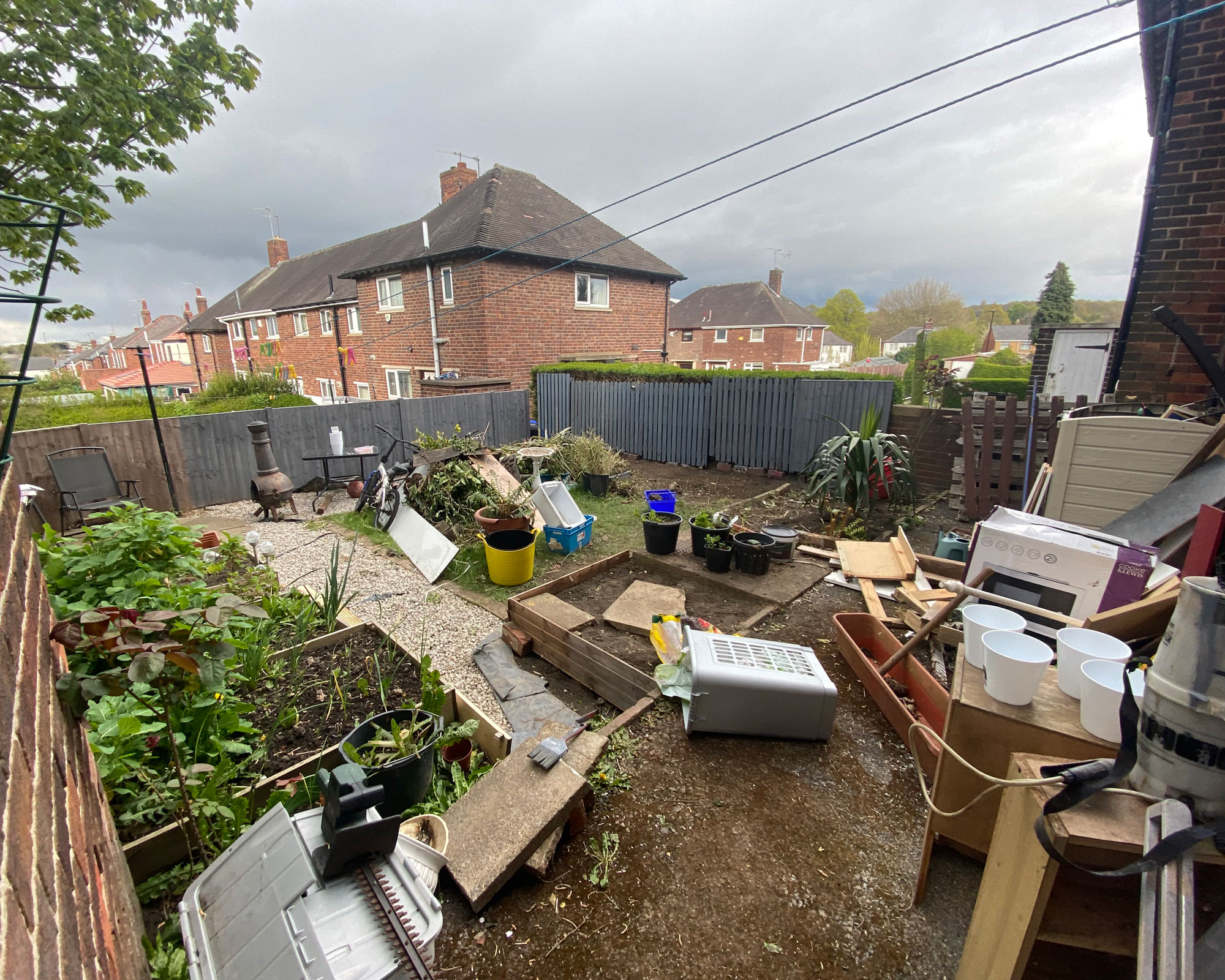
The problem isn’t money—it’s lack of direction. People randomly add plants, furniture, and lights without a plan. The result? Chaos.
To fix this, focus on three fundamentals:
- Structure (layout and zones)
- Function (how you use the space)
- Style consistency
If your yard doesn’t have clear zones—like seating, greenery, and pathways—it will always feel incomplete. Start with layout before buying anything.
tips decoradyard That Actually Work
Start With Zoning Your Space
Zoning means dividing your yard into functional areas. Without this, everything feels random.
Create zones like:
- Relaxation (chairs, benches)
- Dining (table, BBQ area)
- Greenery (plants, lawn)
- Pathways (movement flow)
A small yard can still have 2–3 zones. Large yards should have at least 4.
Focus on Visual Anchors
Every good yard has a focal point. Without it, the space lacks identity.
Examples:
- Fire pit
- Water feature
- Statement plant
- Outdoor sofa setup
Pick one strong centerpiece and build around it.
Choosing the Right Furniture for Outdoor Impact
Furniture is where most people waste money. They either buy too much or buy low-quality items.
What Works Best
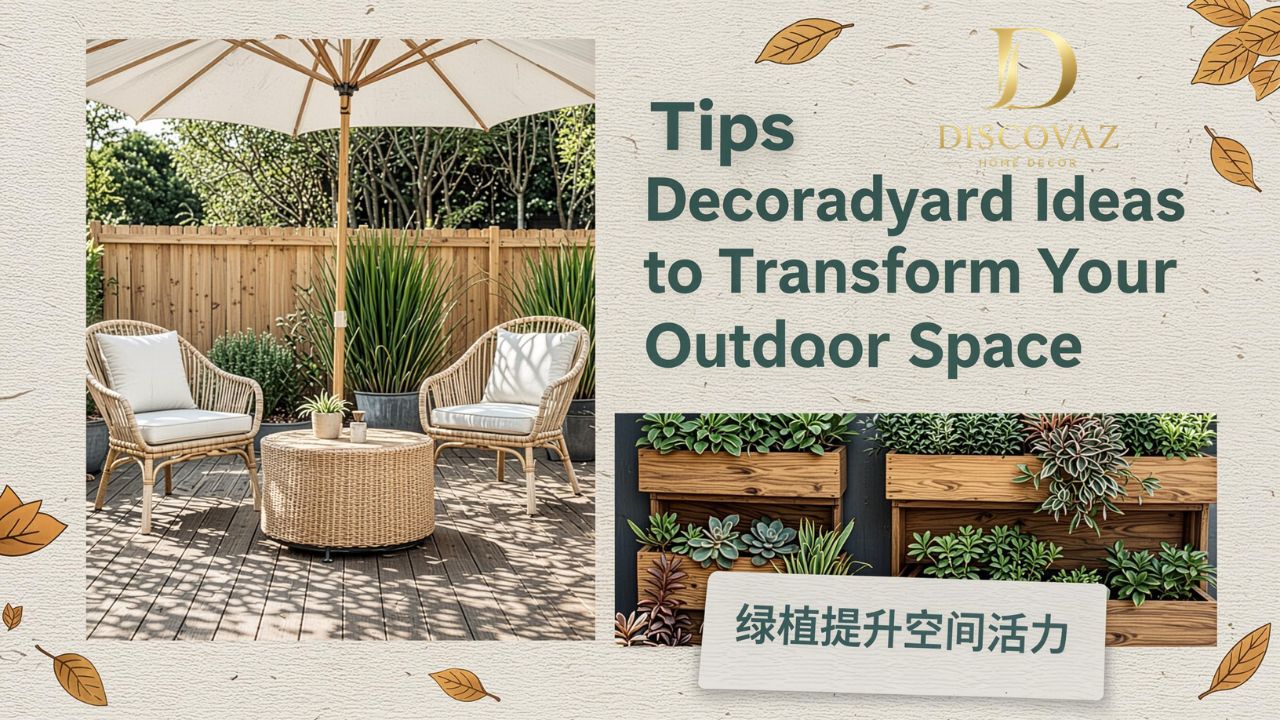
- Weather-resistant materials (rattan, metal, treated wood)
- Neutral colors (easier to style)
- Multi-functional pieces (storage benches, foldable tables)
What to Avoid
- Oversized furniture in small spaces
- Cheap plastic that fades quickly
- Random mismatched styles

If your furniture doesn’t match your space size, everything looks off—even if the pieces are expensive.
Smart Lighting: The Most Underrated Upgrade
Lighting instantly upgrades a yard without major cost.
Types of Lighting That Work
- String lights: Best for ambiance
- Solar lights: Low cost, easy setup
- Spotlights: Highlight trees or features
- Path lights: Improve usability
Placement Strategy
- Around seating areas
- Along pathways
- Highlight focal points
Avoid over-lighting. Too much brightness kills the mood.
Planting Strategy That Doesn’t Look Amateur
Most people plant randomly. That’s why their yard looks messy.

Use Layering
- Tall plants at the back
- Medium plants in the middle
- Small plants in front
Stick to a Color Palette
Pick 2–3 dominant colors. Too many colors = visual noise.
Go Low Maintenance
If you can’t maintain it, don’t plant it.
Budget-Friendly tips decoradyard Ideas
You don’t need a big budget. You need smart allocation.
High Impact, Low Cost Ideas
- Gravel pathways instead of paving
- DIY wooden planters
- Repaint old furniture
- Use outdoor rugs to define space
- Add cushions instead of new seating

Most people overspend on things that don’t matter. Focus on visual impact per dollar.
Creating a Cozy Outdoor Living Experience
A good yard isn’t just pretty—it’s usable.
Add Comfort Layers
- Cushions
- Throws
- Shade (umbrella or pergola)
Make It Feel Like Indoors
Think of your yard as an extension of your living room:
- Defined seating
- Soft lighting
- Textures
This is where most tips decoradyard strategies fail—people decorate but don’t make it livable.
Small Yard? Here’s What Actually Works
Small spaces need precision.
Key Rules
- Use vertical space (wall planters, hanging lights)
- Keep furniture minimal
- Avoid clutter
- Use mirrors to create depth
Best Layout Approach
Stick to one main zone and one secondary zone. Anything more feels cramped.
Seasonal Adjustments That Keep Your Yard Fresh
A yard shouldn’t look the same all year.
Easy Seasonal Changes
- Swap cushion covers
- Change plants based on season
- Adjust lighting intensity
- Add seasonal decor elements
This keeps your space dynamic without major investment.
Mistakes That Kill Backyard Aesthetics
If you ignore these, nothing else matters.
Common Mistakes
- No clear layout
- Too many styles mixed
- Poor lighting
- Cheap materials that fade
- Ignoring maintenance
The biggest mistake? Copying Pinterest without understanding your space.
FAQ
What are the most important tips decoradyard for beginners?
Start with zoning, choose one focal point, and keep your design consistent. Avoid random additions.
How can I decorate my yard on a low budget?
Focus on DIY elements, lighting, and rearranging existing furniture instead of buying new items.
How often should I update my yard design?
Minor updates every season are enough. Major redesigns aren’t necessary unless your needs change.
What is the best lighting for outdoor spaces?
String lights and solar lights offer the best balance between cost, aesthetics, and functionality.
How do I make a small yard look bigger?
Use vertical elements, minimal furniture, and light colors to create an illusion of space.
Are plants necessary for a good yard design?
Yes, but they should be planned. Random planting destroys visual harmony.
What furniture works best outdoors?
Weather-resistant, simple, and functional pieces always outperform trendy options.
Can I design my yard without a professional?
Yes, but only if you follow structured planning. Random decisions will cost more in the long run.
Conclusion
Most people treat their yard like an afterthought—and that’s exactly why it stays average. The difference between a forgettable space and one that stands out isn’t money. It’s intentional design.
If you apply these tips decoradyard strategies correctly—zoning, lighting, smart furniture, and controlled styling—you’ll create a space that actually adds value to your daily life. Not just visually, but functionally.
Stop guessing. Start designing with purpose.